Stamford, CT
Sump Pump Installation
A sump pump moves collected groundwater out of a sealed basin below your basement floor and discharges it safely away from the foundation. In Stamford, CT — where the water table runs high, heavy rains are frequent, and older foundations sit close to saturated ground — a properly sized sump pump with a sealed basin, check valve, and backup option is often the component that keeps water from reaching your floor. We assess your basement, size the system to the actual conditions, and install it so it runs when it needs to.
203-779-6579 Serving Stamford, CT
What a sump pump does and who needs one in Stamford
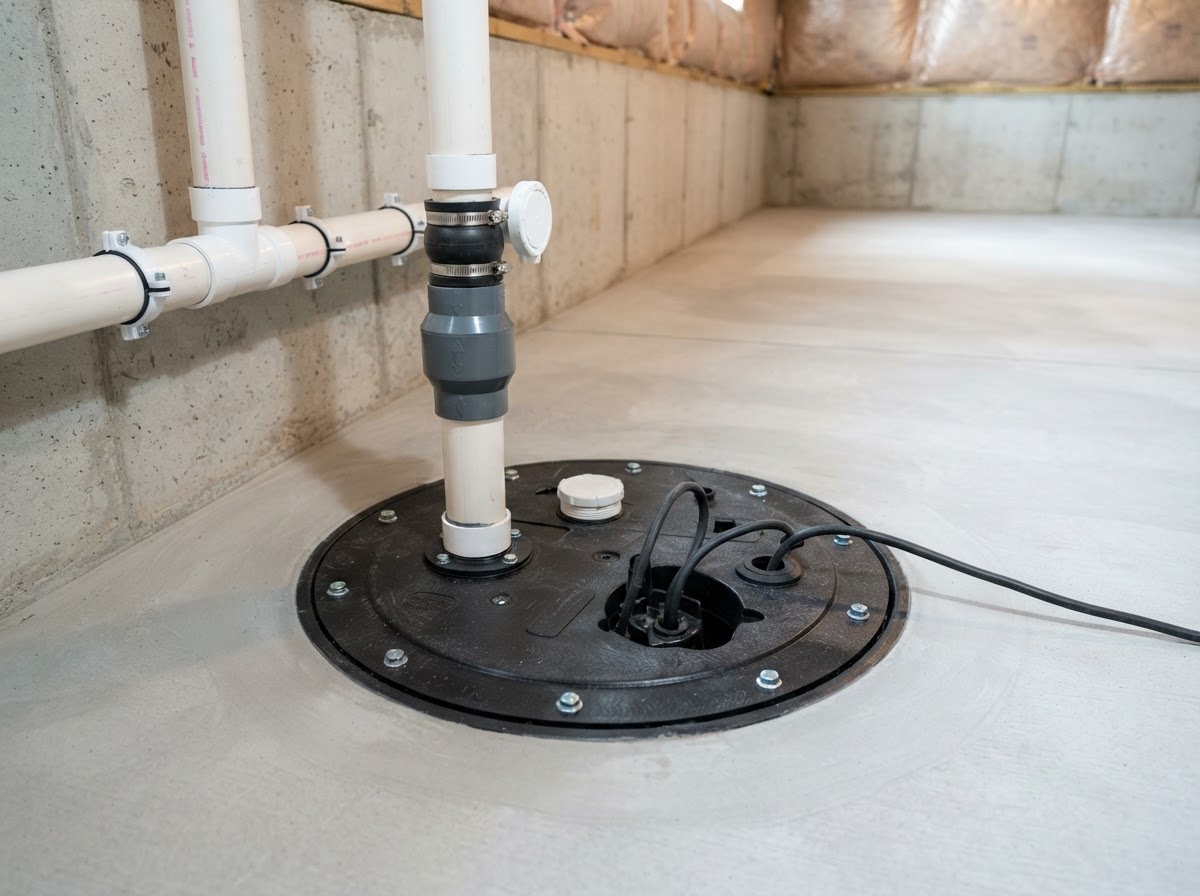
A sump pump sits in a basin set below the basement floor line. Water that collects in the basin — whether it seeps up from under the slab, enters through the wall-to-floor joint, or is routed there by interior drainage — is lifted by the pump and discharged through a pipe to a point outside and away from the foundation. The pump turns on and off automatically based on the water level in the basin, so it runs only when there is water to move.
You may need a sump pump installed if your Stamford basement collects water in a low spot or existing pit, if water rises under the floor during storms, or if you are adding interior drainage that needs a place to discharge. Homes near the coast or on lower ground, where the water table sits high after rain, are common candidates. If you already have a pump that is failing, running constantly, or unable to keep up, a replacement or upgrade may be the right call rather than a repair.
Because a sump only moves water that reaches its basin, it is usually one part of a larger system. When water is entering through walls or the wall-to-floor joint, it is often paired with interior drainage; when the issue is a single leaking crack, crack repair may be enough on its own. We assess the whole basement before recommending a pump so the scope matches the actual problem.
How we assess and size a sump pump system
Sizing starts with the conditions in your basement, not a catalog. We look at whether a basin already exists or needs to be cut into the floor, how much water typically collects and how quickly, the vertical lift required to get the discharge above grade and out away from the foundation, and the horizontal run to a safe discharge point. A pump that is too small won't keep up during a storm; one that is oversized cycles on and off frequently and wears out sooner. We match the capacity to the real demand.
We also check the existing conditions that affect performance: the condition of any current basin and pump, whether the floor is solid enough to cut a clean basin opening, and where the discharge can legally and practically be routed. If you have an older pump that runs nonstop, is loud, or has tripped, we inspect it to determine whether a replacement, a larger basin, or a second pump is the better fix. The assessment is free and the written estimate reflects the actual scope — there is no flat rate because no two basements present the same conditions.
We also check the existing conditions that affect performance: the condition of any current basin and pump, whether the floor is solid enough to cut a clean basin opening, and where the discharge can legally and practically be routed. If you have an older pump that runs nonstop, is loud, or has tripped, we inspect it to determine whether a replacement, a larger basin, or a second pump is the better fix. The assessment is free and the written estimate reflects the actual scope — there is no flat rate because no two basements present the same conditions.
Discharge destination and local rules
Where the pump sends water matters as much as the pump itself. A discharge that dumps water back against the foundation, into a neighbor's yard, or onto a street with stormwater restrictions can create the very problem you are trying to solve. We plan the discharge run so water exits well away from the foundation and to a location that meets local requirements for Stamford and the surrounding Fairfield County towns.
That planning includes the route of the discharge pipe, a check valve to stop water from flowing back into the basin after each cycle, and a discharge point that won't simply send water back toward the house. We discuss the options with you during the assessment so the final arrangement is one you understand and that works for your property. Where a particular discharge destination is restricted, we explain that plainly rather than proposing something that won't hold up.
That planning includes the route of the discharge pipe, a check valve to stop water from flowing back into the basin after each cycle, and a discharge point that won't simply send water back toward the house. We discuss the options with you during the assessment so the final arrangement is one you understand and that works for your property. Where a particular discharge destination is restricted, we explain that plainly rather than proposing something that won't hold up.
Primary and backup power planning
A primary sump pump runs on house power, which means it stops the moment the power goes out — and outages often coincide with the storms that produce the most water. For many Stamford homes, a backup is worth considering so the pump keeps working when the grid is down. We review the backup options that fit your situation, including battery backup systems and water-powered backups where the home's water supply and pressure allow.
Backup sizing depends on how much water your basement produces and how long an outage typically lasts. A backup that is too small gives a false sense of security; one that is right-sized runs long enough to get through a typical storm. We explain the trade-offs between capacity, runtime, and cost so you can decide based on your risk and budget rather than a one-size recommendation. The written estimate lists exactly what is included in the backup, if you choose one.
Backup sizing depends on how much water your basement produces and how long an outage typically lasts. A backup that is too small gives a false sense of security; one that is right-sized runs long enough to get through a typical storm. We explain the trade-offs between capacity, runtime, and cost so you can decide based on your risk and budget rather than a one-size recommendation. The written estimate lists exactly what is included in the backup, if you choose one.
Check valve, alarm, and maintenance
Beyond the pump itself, a few components determine whether the system works when it counts. A check valve stops water from flowing back into the basin after the pump shuts off, which reduces short cycling and wear. A high-water alarm warns you before the basin overflows, giving you time to act. We include the components that fit your system and explain what each does.
A sump pump also needs periodic maintenance to keep working — clearing debris from the basin, testing the float switch, and confirming the discharge line is open. We walk you through what to check and how often, and we are straightforward about which parts of the upkeep you can handle and which benefit from a service visit. The goal is a system you can rely on through the next storm, not one that quietly fails between service calls.
A sump pump also needs periodic maintenance to keep working — clearing debris from the basin, testing the float switch, and confirming the discharge line is open. We walk you through what to check and how often, and we are straightforward about which parts of the upkeep you can handle and which benefit from a service visit. The goal is a system you can rely on through the next storm, not one that quietly fails between service calls.
What to expect and limitations
A properly installed sump pump removes water that reaches its basin and keeps the floor dry when the system is working and the power is on (or the backup is running). It does not, however, stop water from entering through a leaking wall crack or the wall-to-floor joint — those need crack repair or interior drainage. And a pump only manages water routed to it, which is why it is so often paired with a drainage system.
We tell you honestly when a sump pump alone will solve your problem and when it won't. If the water is coming through a crack, we'll point you toward crack repair; if it's rising under the whole floor, a drainage system feeding the sump is usually the better answer. We never oversell a pump where a simpler fix would do, and we never under-scope a job that needs more than a pump to stay dry. The written estimate reflects the full scope we recommend.
We tell you honestly when a sump pump alone will solve your problem and when it won't. If the water is coming through a crack, we'll point you toward crack repair; if it's rising under the whole floor, a drainage system feeding the sump is usually the better answer. We never oversell a pump where a simpler fix would do, and we never under-scope a job that needs more than a pump to stay dry. The written estimate reflects the full scope we recommend.
Service area
We install and service sump pump systems in Stamford and nearby Fairfield County towns. Request an assessment with your service address and we'll inspect the basement, size the system to the actual conditions, and recommend the right scope — with a written estimate and no obligation.
Ready to stop the water?
Tell us about your basement or crawl space and the symptoms you're seeing. We'll recommend the right scope and provide a written estimate after an on-site assessment — no obligation.
- • Free on-site assessment
- • Clear, written estimate
- • Local Stamford crew
Sump Pump Installation questions, answered
Common questions homeowners in Stamford, CT ask about sump pump installation.
Hiring & process
Pricing
Discharge & maintenance
Service area & next steps
Get your assessment
Request a visit and we'll inspect your basement or crawl space, identify where water is entering, and recommend the right sump pump installation scope for your home.
Related services
- Foundation Crack Repair
- Crawl Space Encapsulation
- Interior Drainage Systems
- Exterior Basement Waterproofing
Not sure which service you need? See all services or contact us.